This website is an independent guide to home services.

Guide · Choosing a door

Garage Door Materials and Insulation

Published

Steel, wood, composite and fibreglass doors, and what insulation changes. Products and prices come from the contractor who measures your opening.

An independent guide to home services. We are not a contractor and do not do the work.

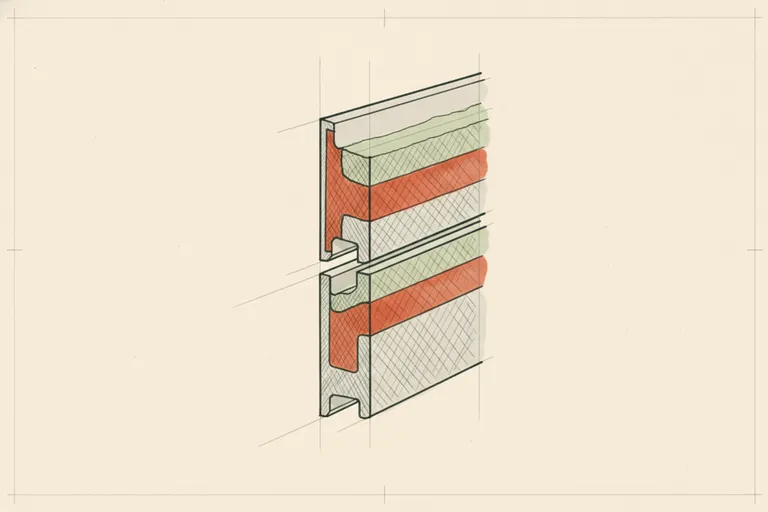
Cut-away sketch of two garage door panel sections showing the skin, insulation core and edge joint
Fig. 1Panel materials and insulation in section.

Short answer

What are garage doors made of?

Garage doors are commonly steel, aluminum frames with glass, wood, or composite, fibreglass and vinyl. Each trades off upkeep, weight and look, and insulation changes how a door handles temperature. This guide compares them side by side. Products and prices come from the contractor who measures your opening, not from this site.

A garage door is the largest moving part of a house, and its material decides how it looks, how much upkeep it needs, how it copes with weather and how much load the springs and opener carry.

It covers the common materials, what insulation changes, and the questions that let you compare offers without guessing.

Which material suits a typical home?

For many households steel is the sensible starting point, because it is strong, comes in many finishes and usually costs less than wood or glass-heavy designs.

No material wins everywhere, though; the right match depends on the climate, the upkeep a household will realistically keep up, how the garage is used and what the budget allows.

A beautiful door that demands constant attention will frustrate a household with little spare time, so an honest view of realistic upkeep matters.

Materials

The common materials, one by one

01

Steel doors

Steel panels are usually coated with zinc and finished with baked paint, and that combination is what slows rust.

Thicker steel resists dents better, which matters if children play ball against the door or a car bumper meets it now and then.

Ask the installer about the thickness of the steel and how the surface is protected.

Scratches that cut through the paint should be touched up early, since exposed steel is where rust begins, and this matters more in damp or salty air.

02

Aluminum frames with glass

Aluminum frames holding glass or translucent panels give a modern, bright look and do not rust.

The trade-off is that the metal dents more easily than steel, and large glass areas let heat travel in and out of the garage and reduce privacy.

These doors suit a garage that doubles as a studio or a workshop where daylight matters more than a stable temperature.

03

Is a wood garage door worth the upkeep?

Real wood is warm to look at and can be made to measure, which helps with an unusual opening or a design that has to match period trim.

It also asks for regular sealing or painting, and a neglected wood door can swell, warp or rot at the bottom edge where water collects.

Wood is heavy, so the springs must be sized for that weight, and an unbalanced heavy door strains the opener and the hardware.

If you love the look and accept the upkeep, wood is reasonable; if you want a low-effort door, a steel or composite panel with a wood-grain finish usually fits better.

04

Composite, fibreglass and vinyl

Composite panels imitate wood grain with much less maintenance, so they attract people who want the look without the repainting.

Fibreglass and vinyl hold up against moisture and decay, which makes them reasonable where the air is humid or salty, although a cheaper skin can fade or crack in strong sun and in hard freezes.

Ask how the panel skin is attached to the frame and what the maker says about fading, because that is where lower-grade versions tend to fail first.

At a glance

Materials side by side

The five material families in one line each
MaterialWhat to expect
SteelStrong and affordable, many finishes, dents and rust if the coating is breached.
Aluminum with glassModern look, no rust, dents easily and loses heat through the glazing.
WoodCustom shapes and a warm look, needs regular sealing or paint and is heavy.
CompositeWood-like grain, modest upkeep, quality depends on how the skin is built.
Fibreglass and vinylResist rot and damp, can fade in strong sun, suit humid or coastal settings.

Insulation

What insulation changes in a garage door

Insulation slows the movement of heat through the door, so an attached garage stays closer to a steady temperature and the rooms next to it feel less of the outdoor swing.

It also dampens noise, and a foam-filled panel is stiffer, so it resists denting and flexing better than a hollow skin.

Construction varies: some doors are a bare steel skin, some have foam board stuck to the back and some have foam injected between an outer and an inner skin so the panel becomes a solid sandwich.

The sandwich type usually performs better and feels more solid, but it is also heavier and costs more, so the springs and the opener must suit it.

Three garage door panels cut openA bare steel skin, a skin with foam board on the back, and foam between an outer and an inner skin. The layers of each panel move apart as you scroll or use the slider.
  1. Bare steel skin
  2. Foam board on the back
  3. Foam between two skins
Fig. 2 · Three ways a panel can be built, shown in section. The layers separate as the slider moves.

A detached garage that is never heated gains little from thick insulation, while a garage used as a workshop or a gym gains a lot.

Gaps matter as much as foam: worn seals around the edges and along the bottom let in drafts, dust and pests no matter how well the panel is filled.

Ask the provider

Ask the provider to explain the insulation type and the thermal resistance figure printed in the product sheet, and to say how the door performs at the seals and at the joints between panels.

Weight, springs and safety

Every change in material or insulation changes the door’s weight, and the counterbalance springs are chosen to match that weight.

A new, heavier door on springs meant for a lighter one will feel heavy, may rise crooked and puts strain on the opener.

Springs and cables hold stored energy and can injure or kill, so matching them to a new door is work for a trained garage door technician and never a weekend project.

A door that seems heavy, uneven or noisy is one to report to a technician, noting the symptom and keeping people and vehicles out of its path.

For more on what these parts do and what failure looks like from a safe distance, read Garage Door Spring and Cable Safety: When to Call a Professional.

Stop: springs and cables are under high tension. Read why, on the safety page

Common questions

Price and saving money

Why do garage door prices vary so much?

The cost of a door project tracks its dimensions, glazing, finish, insulation and hardware; a wider or taller opening needs extra material and stronger springs, and a custom wooden design costs more than a basic steel panel.

Installation adds costs of its own, for instance changing the track layout under a low ceiling, relocating wiring and hauling away the old door.

Urgent or after-hours calls generally cost more than booked ones, so a planned replacement is easier on the budget than a rushed one.

Parts differ in quality, so find out exactly what is included in each offer and compare offers on the same specification.

Can you save money without risking quality?

Yes, if you cut the cosmetic extras and keep the parts that carry the load.

A plain panel design, a simpler finish or fewer windows lowers the bill without touching strength, while thin steel, weak seals or undersized hardware only move the cost to later.

Request an itemised quote that lists the door, the labour and any extras on separate lines.

With that detail you can trim the scope and set offers side by side.

Before you choose

Questions to ask before you choose a material

A sensible choice balances look, upkeep, climate and budget, and it is made together with a technician who has seen the opening and the hardware.

  1. Ask what the panels are made of, how thick the skin is and how the surface is protected against rust, fading or rot.

  2. Ask whether the door is insulated, how the insulation is built into the panel and how the seals and panel joints are handled.

  3. Ask whether the springs and cables will be matched to the weight of the new door, and who does that work.

  4. Ask for the price split into door, labour and extras so that you can compare offers on equal terms.

  5. Ask what upkeep the material needs, such as repainting, sealing or cleaning, and how often.

Corrections and ideas

Found a mistake or a gap?

Tell us about an error on a page, a topic we should cover, or anything else about this site. A person reads messages that are not spam and replies by email, and we correct the page if it needs it.

  1. Tell us which page and what to change
  2. We read it
  3. We reply by email