Guide · Openers
Garage Door Opener Types and Electrical Work Basics
Published
The opener is the part people notice most, and the easiest to misjudge: many problems blamed on it start somewhere else in the door.
An independent guide to home services. We are not a contractor and do not do the work.
Short answer
What does a garage door opener actually do?
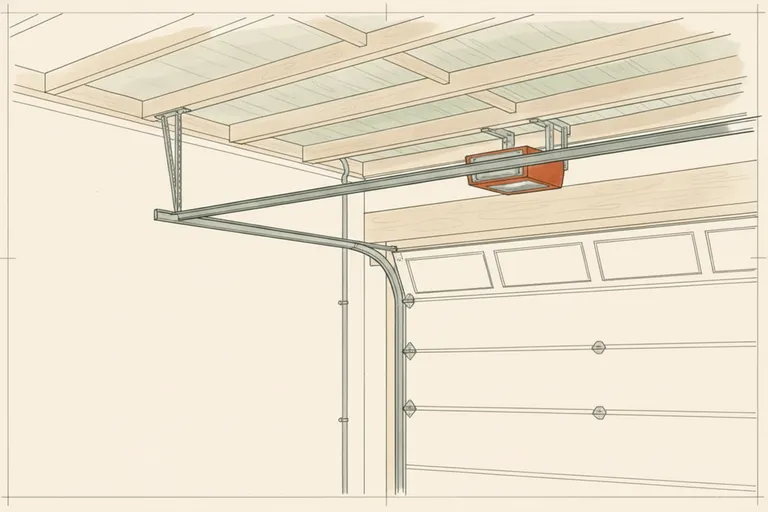
The opener steers a balanced door along its path. The spring system, not the motor, carries the weight, which is why many problems blamed on the opener start elsewhere in the door. Drive types include chain, belt, screw, direct and jackshaft, and any wiring work belongs to a licensed electrician rather than to the homeowner.
The opener makes the noise and holds the remote, so it gets the blame for much that it does not cause.
The choice between chain, belt, screw, direct and jackshaft models comes down to sound, upkeep, the shape of the garage and the weight of the door. The sections below take each one in plain terms.
What is the opener really doing?
It guides the door. The springs carry the door’s weight, and the opener starts the movement, steers along the tracks and stops at the ends of travel.
Why a weak motor is rarely the culprit
A door that has lost its balance can overload even a strong motor, and a new unit will strain against the same problem.
If a newly fitted opener hesitates, shudders or reverses, the door itself deserves a professional look before anyone blames the motor.
Drive types
The main opener drive types
- 01
Chain drive
A metal chain does the pulling; it is rugged, widely understood and generally the loudest of the group.
- 02
Belt drive
A reinforced belt replaces the chain, giving a gentler, quieter ride that helps when a bedroom backs onto the garage.
- 03
Screw drive
The trolley travels on a threaded shaft, so there is little hardware to wear, though some owners find it slower and a bit fussy in big temperature swings.
- 04
Direct drive
The motor itself glides along the rail, which keeps sound down and leaves little to wear between motor and door.
- 05
Jackshaft
Mounted at the side of the door, it turns the torsion shaft itself, which frees ceiling space and suits a tall door.
Chain models earn their place through toughness and a long track record, and repair parts are easy to find. The trade-off is vibration that carries into the framing, which is noticeable when a bedroom or living space sits above the garage.
Belt models answer much of that complaint, and they often cost more up front. Screw models suit many ordinary doors and ask for little attention, though a cold garage can change how they feel.
Ask a provider to explain which drive they would pair with your door and why, rather than accepting a single model offered for every house.
What is the quietest type of garage door opener?
Belt drive and direct drive units are the usual answers, and a wall-mounted jackshaft can also be quiet because the motor is not hanging from the ceiling and shaking the garage.
Sound also depends on the door. Dry rollers, worn hinges and loose hardware can make a gentle opener seem harsh, so servicing the door sometimes does more than buying a new motor.
Which opener suits a heavy wooden door?
A heavy door puts more load on the drive, so look for a sturdy rail and a motor sized for the weight. A chain or a strongly built belt unit are natural candidates.
The counterbalance matters more than the motor. A solid wood door that is out of balance will wear any opener quickly, so have the springs checked by a technician when you change the unit.
What is a jackshaft opener?
It is an opener mounted on the wall beside the door, where it turns the torsion shaft directly instead of pulling the door along a rail.
That leaves the ceiling clear for storage, a tall door or a loft, and many owners like the tidy look. It does need wall space beside the door and a door that is well balanced.
Rules
Rules, permits and electrical work
The city’s homeowner guide lists new or replacement windows or door openings among the building permits it requires.
Ask the city whether swapping a garage door, or changing the size of its opening, falls under that wording for your house.
According to the same homeowner guide, the electrical permit category covers installing, changing or repairing any hard wired electrical system.
Ask the installer whether the new opener needs new wiring, and who deals with any permit question if the wiring changes.
City of Boise, checked : Homeowner’s Guide to Residential Construction (Boise’s Building Permit Process) (opens in a new tab)
Registration and who does the work
The city guide says a homeowner does not need to register as a contractor with the state for a project on the homeowner’s primary residence. That rule is about registration only. Spring and cable work stays with a trained garage door technician.
According to the state contractor FAQ, the contractor registration act requires registration, not licensure.
Ask any provider for proof of registration and insurance. Springs and cables hold stored energy and are work for a trained garage door technician.
Idaho Division of Occupational and Professional Licenses, checked : Contractor FAQ: Frequently Asked Questions (opens in a new tab)
Thinking of doing this yourself? Stop.
Wiring and panels can cause a shock or a fire, even when everything looks switched off. Stop there and call a licensed electrician.
If the door is crooked, very heavy, loud with a bang, or shows a frayed cable or a gap in a spring, stop using the door and the opener, keep people and vehicles out of its path, and call a trained garage door technician.
Electrical work inside the opener housing is also a job for a professional.
Keep reading
Where to go next
Corrections and ideas
Found a mistake or a gap?
Tell us about an error on a page, a topic we should cover, or anything else about this site. A person reads messages that are not spam and replies by email, and we correct the page if it needs it.
- Tell us which page and what to change
- We read it
- We reply by email