Blog · Older homes
Garage Doors in Older Boise Homes
Published
Older houses are where garage doors tend to bring surprises, because the building and the door often belong to different eras.
Short answer
Why are garage doors harder in older Boise homes?
An older garage may have been built for a narrower car and a lower roofline than a modern door assumes, and framing settles with age. The door may also have been replaced long after the house went up. Ask when the door and opener were installed, and ask a trained garage door technician what your opening allows.
Boise housing by age
How old are the homes around you?
The figures describe the city, not your house. They show that an older door or opener is a normal thing to meet here.
About 88 in 100 Boise homes were built in 2009 or earlier, and 57 in 100 before 1990
Share of housing units built in each period. Margins of error (90 percent) are in the table.
- Boise city
- Ada County
Show the numbers
| Built | Boise city | Ada County | ||||
|---|---|---|---|---|---|---|
| Homes | Margin (90%) | Share | Homes | Margin (90%) | Share | |
| 1939 or earlier | 6,561 | ±542 | 6.3% | 8,408 | ±767 | 4.1% |
| 1940 to 1949 | 3,833 | ±474 | 3.7% | 4,304 | ±501 | 2.1% |
| 1950 to 1959 | 7,529 | ±656 | 7.2% | 8,373 | ±731 | 4.1% |
| 1960 to 1969 | 8,158 | ±731 | 7.8% | 9,634 | ±812 | 4.7% |
| 1970 to 1979 | 18,618 | ±785 | 17.8% | 27,877 | ±1,046 | 13.6% |
| 1980 to 1989 | 15,053 | ±940 | 14.4% | 20,354 | ±1,129 | 9.9% |
| 1990 to 1999 | 20,541 | ±1,104 | 19.6% | 37,924 | ±1,505 | 18.5% |
| 2000 to 2009 | 11,900 | ±709 | 11.4% | 42,457 | ±1,632 | 20.7% |
| 2010 to 2019 | 11,312 | ±803 | 10.8% | 38,293 | ±1,407 | 18.7% |
| 2020 or later | 1,328 | ±279 | 1.3% | 7,444 | ±610 | 3.6% |
| All homes | 104,833 | ±1,060 | 100% | 205,068 | ±209 | 100% |
The counts cover all housing units, apartments and mobile homes included, not only homes with a garage door. The 1990 to 1999 group spans 1993.
Source U.S. Census Bureau, American Community Survey 2019-2023 5-year estimates, table B25034 (year structure built). Open the source (opens in a new tab). Checked .
What to do with it
Ask when the door and opener were installed. The year the house was built is only a guide, because doors and openers get replaced.
The house
Why older houses make garage doors harder
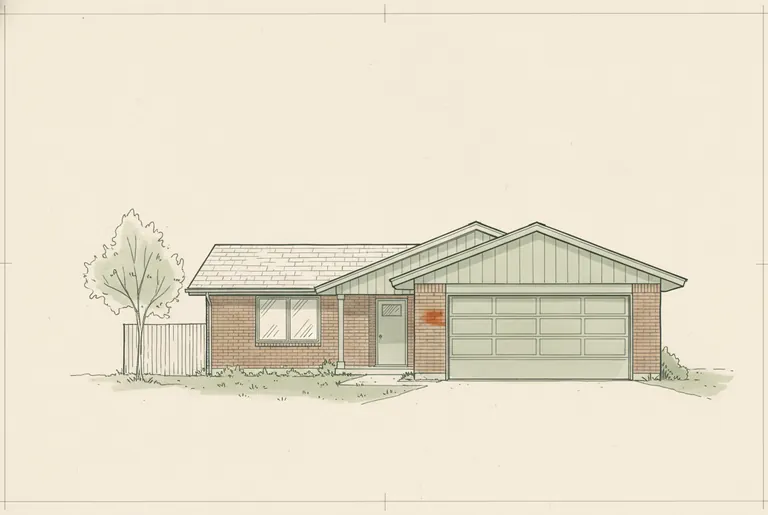
A garage in an older home may have been built for a narrower car and a lower roofline than a modern door assumes.
Headroom above the opening decides which track layout fits, and a low ceiling can force a custom arrangement that costs more than a straightforward swap.
Framing settles with age too, so an opening that was square when built can be slightly out of true now, and a new door will show that crookedness quickly.
Many older garages also had the door added or changed long after the house went up, which means the wiring, the mounting points and the wall around the door may be a patchwork.
Some older garages are detached and sit well back from the street, while others were attached later and share a wall with living space. That layout affects how much noise reaches the house, how cold the garage gets, and whether insulation is worth raising when a door is replaced.
The door
What age does to the door itself
A well-kept old door can outlast a neglected newer one, so the calendar matters less than how the door has been treated.
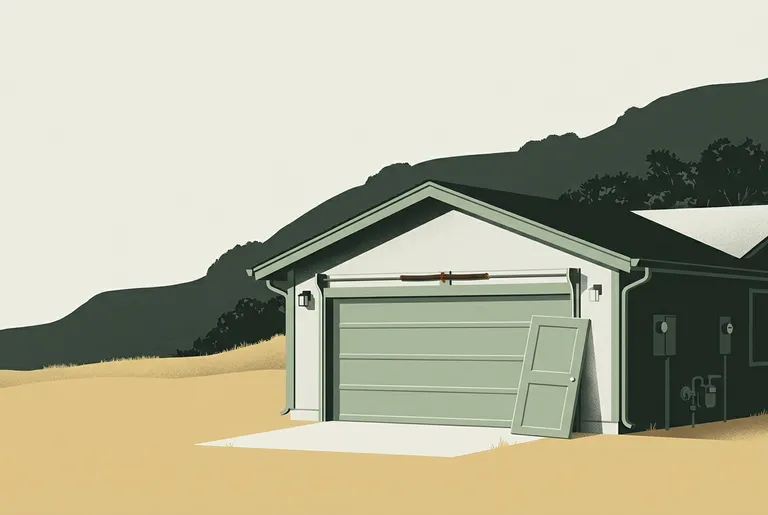
Still, long years of daily use wear the same parts again and again: rollers, hinges, tracks, and the springs and cables that carry the weight of the door. Watch for these from a distance:
- Panels that sag in the middle, split at the edges or show soft, rotting wood near the floor.
- Rust along the bottom corners and the track, which can hide worn hardware behind it.
- A door that rises crooked, scrapes the track or looks uneven as it travels.
- Grinding, popping or squealing that grows louder over weeks rather than staying constant.
- An opener that hesitates, reverses without cause or hums without moving the door.
Stop: springs and cables are under high tension. Read why, on the safety page
If you see a gap in a spring coil, a frayed or slack cable, or a door that sits crooked, stop using the door and the opener and keep people and vehicles out of its path.
The opener
How old is your opener?
An opener built before 1993 predates the federal rule that makes it stop and reverse when something is in the way.
Openers made on or after January 1, 1993 must meet the federal entrapment standard
Three dates from 16 CFR Part 1211. The years are not to scale.
Openers made from this date must carry the month or week and year they were made, and say they conform.
16 CFR 1211.19The entrapment protection standard applies to every residential opener made from this date.
16 CFR 1211.1An amendment was published. The eCFR lists it as pending, so check the current text before relying on this page.
91 FR 68459
You can read the date label on your opener from the floor. If there is no label, or it shows a date before 1993, ask a trained technician about the opener.
Show the numbers
| Date | What happens | Where |
|---|---|---|
| January 1, 1991 | Openers made from this date must carry the month or week and year they were made, and say they conform. | 1211.19 |
| January 1, 1993 | The entrapment protection standard applies to every residential opener made from this date. | 1211.1 |
| October 30, 2026 | An amendment was published. The eCFR lists it as pending, so check the current text before relying on this page. | 91 FR 68459 |
The eCFR lists a pending amendment (91 FR 68459, published October 30, 2026). The dates here are the rule as of November 1, 2026.
Source U.S. Consumer Product Safety Commission, 16 CFR Part 1211, through the Electronic Code of Federal Regulations (as of November 1, 2026). Open the source (opens in a new tab). Checked .
Read the label on the opener from the floor. If it shows a date before 1993, or there is no label, do not test it yourself. Ask a trained garage door technician about it.
Owners usually decide what happens to a door and opener. A tenant who notices trouble should tell the landlord and not fix anything alone.
For what to do if a door ever fails to stop, read Garage Door Spring and Cable Safety: When to Call a Professional.
Quick answers
Three questions older‑home owners ask
Short answers, with the longer guides one click away.
Is a noisy garage door dangerous?
Not always. Dry hinges and loose hardware make a racket that is cheap to deal with, but a loud bang can mean a spring has let go.
Note when the sound happens, whether during opening, closing or both, and whether the door travels smoothly under the opener, because that detail helps a technician narrow the cause by phone.
How does a garage door stay up without the opener holding it?
Heavy springs hold the door in balance, soaking up energy as it descends and releasing it as it climbs, with cables linking the lower corners to the spring assembly.
The opener mostly guides a door that is already balanced, which is why a heavy, uneven door points to the springs or hardware rather than the opener.
Why do garage door prices vary so much?
Size, windows, finish and insulation all move the price, and an older opening can add work such as a changed track layout, rewiring or removing a worn door.
Urgent or after-hours calls tend to cost more than booked ones, so a door that is only starting to misbehave is cheaper to handle on your schedule. Ask any contractor for a breakdown that separates the door, the labour and the extras, so you can compare offers fairly.
Money
Where small savings are safe
The sensible savings are in small, early fixes, such as lubricated hinges and a technician’s sensor check, before the wear spreads.
Ask the city whether the work needs a permit or an electrical sign-off before the job starts. For where to look, see Boise Garage Door Permit and Contractor Registration Rules.
More short reads
Other questions on the blog
Read the one that fits your question; none needs the others.